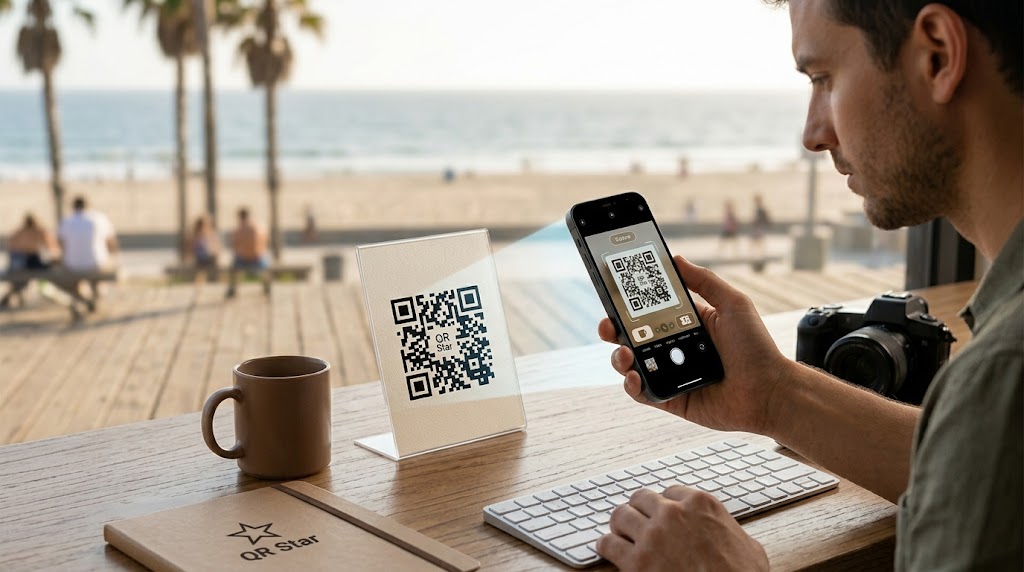
Walk down any local high street, step into an open house, or look closely at the counter of your favorite neighborhood cafe. Chances are, you will spot a lonely, black-and-white square printed on a flyer or acrylic sign with a single, uninspiring directive underneath: “Scan Me.”
In modern offline-to-digital marketing, a naked QR code paired with a generic “Scan Me” frame is a massive missed opportunity. It asks consumers to take a complete blind leap of faith. In an era of heightened digital security fatigue and short attention spans, consumers do not scan mystery links. A “Scan Me” headline tells a user exactly what to do, but completely fails to explain why they should do it.
If your offline physical traffic isn’t converting into online engagement, the problem isn’t the technology—it is your execution. This guide breaks down the visual psychology, design rules, and tactical copywriting formulas needed to build a perfect, high-converting QR code CTA.
The Psychology of the Scan: Moving from Friction to Value
Every time a consumer pulls out their smartphone to scan a code, they perform a rapid, subconscious cost-benefit analysis. The physical act of stopping, opening a camera app, aligning the frame, and waiting for a link to resolve creates natural friction. If the perceived reward on the other side is vague, the user will simply walk away.
To capture that traffic, your QR code must pass the Three-Second Glance Test. Within three seconds of looking at your marketing asset, a customer must clearly comprehend three key pieces of information:
- The Action: What exact physical step do they need to take right now?
- The Incentive: What precise value, reward, or exclusive content is waiting for them on the immediate other side?
- The Security: Does the branding feel trusted, clean, and explicit enough to minimize risk?
The Copywriting Formula: Action + Value + Speed
A high-converting frame transforms a passive graphic into an active billboard. When crafting the micro-copy to surround your code, ditch the passive placeholders and implement this highly structured three-part framework:
[Imperative Action Verb] + [Explicit Target Value] + [Friction Reducer]
By blending clear directions with immediate benefit, you eliminate hesitation. Let’s compare common, low-performing examples with high-converting alternatives built using this framework:
❌ Low-Converting Examples
- “Scan Me” (Provides zero value or context)
- “Visit our website” (Vague destination, high user friction)
- “Check us out on social media” (Unclear benefit, easily forgotten)
High-Converting Strategic CTAs
- “Scan to View Tonight’s Fresh Specials & Allergen Menu”
- “Scan to Unlock Your 15% Welcome Discount Instantly”
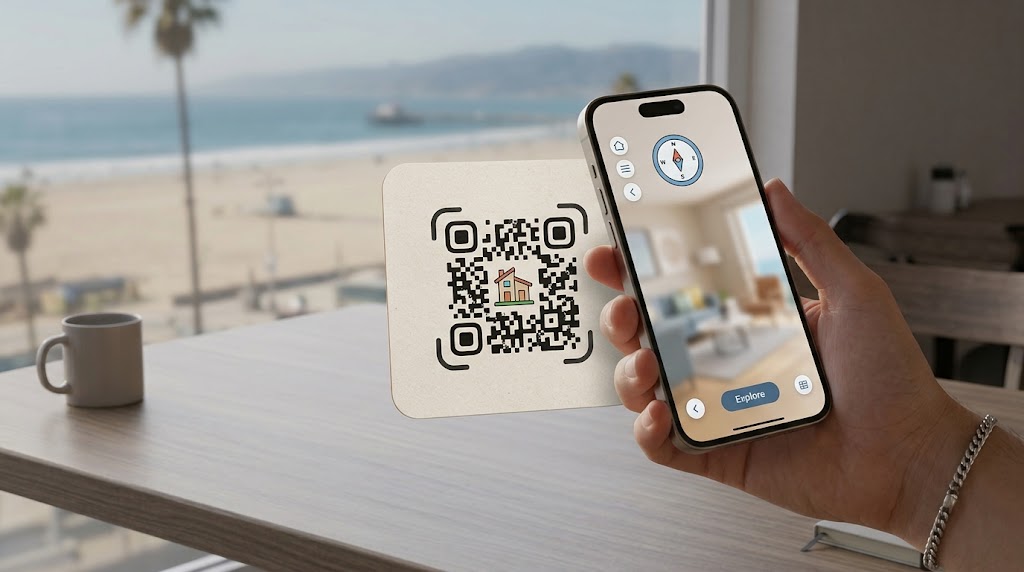
- “Point Your Camera to Access the 3D Virtual Home Tour”
Visual Anatomy: Designing for Scannability and Contrast
Great copy can only convert if the smartphone camera can actually read the code. Balancing your brand’s unique design language with strict mechanical requirements is vital. Pay close attention to these technical layout details:
1. The Contrast Rule
While custom brand palettes look excellent, preserving high contrast between your data modules (the dark elements inside the pattern) and the background matrix is completely non-negotiable. Aim for a minimum contrast ratio of 4:1. Dark navy, deep charcoal, or rich forest green work beautifully against white or light cream—but avoid pastel or neon elements that blur easily under varied ambient lighting conditions.
2. The Technical Quiet Zone
Every operational QR code requires an unmarred border of negative space surrounding its perimeter, technically referred to as the “Quiet Zone.” If your text elements, borders, or illustration graphics bleed directly into this quiet zone, smartphone lenses will fail to anchor properly, resulting in annoying technical delays for the user.
3. The Distance-to-Size Printing Formula
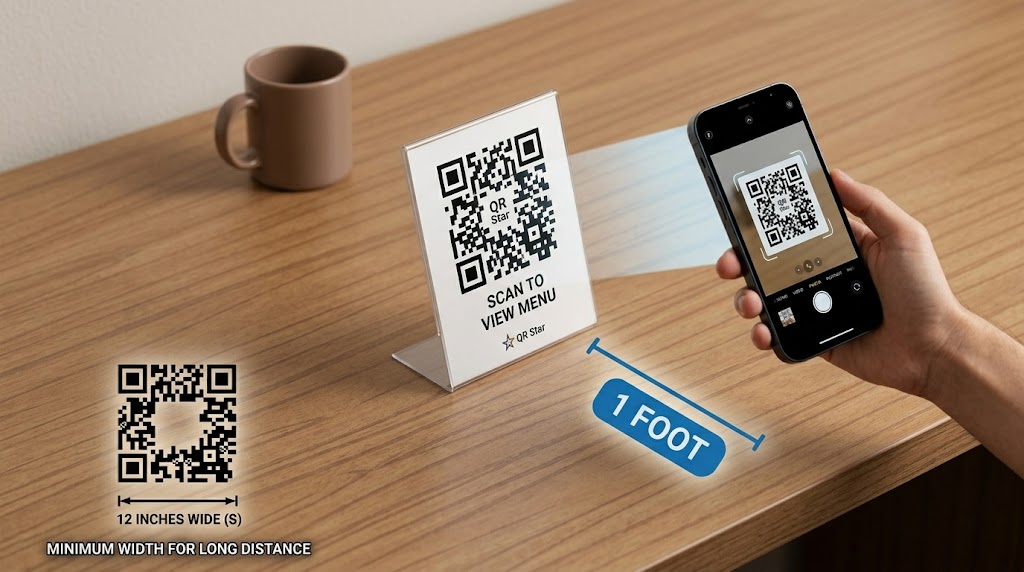
Never leave your print dimensions to guesswork. To ensure your code can be comfortably scanned from its expected viewing position, apply the industry-standard 10:1 distance equation:
For a tabletop menu or checkout counter display scanned from a comfortable arm’s reach of 1 foot, your code should be a minimum of 1 inch wide. Conversely, for an event poster or street-level window vinyl meant to be read from a distance of 10 feet, the core QR code asset must be printed at a minimum size of 12 inches across to compensate for camera lens limitations.
Balancing Brand Aesthetics: Polishing Your Asset
An effective marketing strategy shouldn’t force you to compromise your visual identity. You can easily polish and blend custom elements without hurting technical recognition metrics:
- Intelligent Logo Placement: Thanks to built-in Reed-Solomon error correction algorithms, high-tier dynamic QR codes can safely recover up to 30% of obscured data modules. This gives you the technical room to center a clean, vector-based brand icon directly in the heart of the code pattern.
- Stylized Eye Frames: Soften the look of your code by shifting away from stark, industrial square anchor blocks. Utilize rounded corner eyes, fluid circles, or custom shapes that mimic your brand’s natural editorial typography.
- Prioritize Dynamic URL Infrastructures: Static codes embed heavy, raw data arrays that create a dense, messy labyrinth of tiny pixels. Dynamic codes utilize clean, short redirect URLs. This maintains a light, spacious, and simplified pixel layout that loads instantly, even on older mobile devices or in low-light environments.
Conclusion: Auditing Your Current Footprint
Stop leaving your offline-to-digital touchpoints to random chance. Take a physical walk through your current operational environments today and execute a rapid audit: Are you still forcing customers to decipher a generic “Scan Me” placeholder, or are you offering them an immediate, value-packed invitation to connect?
Don’t let valuable physical leads slip away. Use QR Star to design high-converting, fully branded, and perfectly optimized codes for your physical assets in under two minutes.