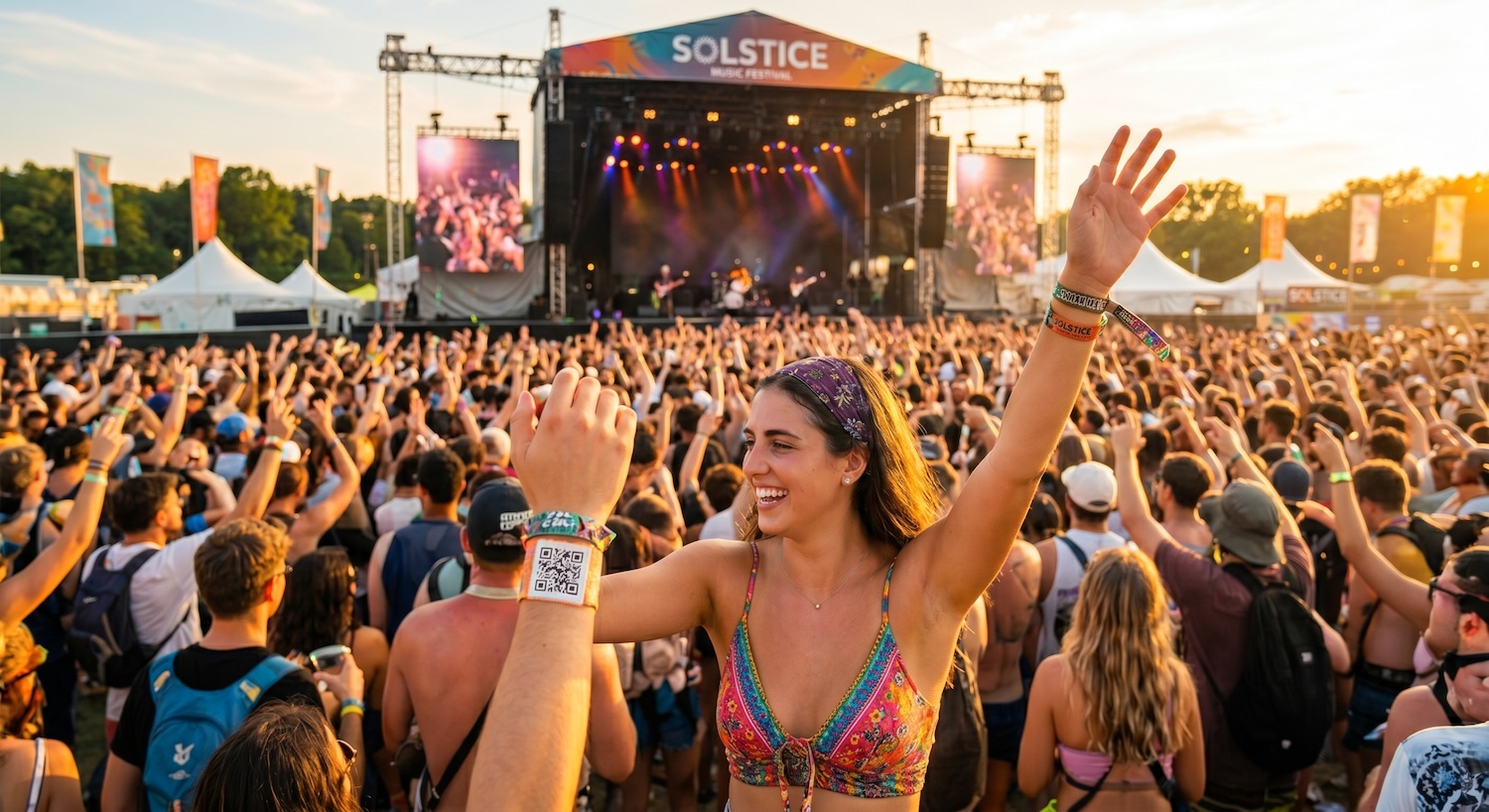
Picture this: It’s 95°F in the shade. You have 10,000 festival-goers pouring through the gates, a sudden schedule change on the main stage, a massive line at the merch booth, and a literal trail of discarded paper maps littering the grass.
Traditional event production tools—heavy apps that take forever to download on congested festival Wi-Fi, printed posters that can’t be updated, and fragmented signage—just can’t keep up with massive crowds, outdoor venues, and brief attention spans.
The humble QR code has evolved into a powerhouse for real-world event management. From the moment you launch your street team marketing to the second the headline act takes the stage, smart, dynamic QR codes bridge the gap between offline spaces and seamless digital logistics. Here is your complete playbook for a streamlined summer event.
Phase 1: Pre-Event—Driving Hype & Frictionless Ticket Sales
Before anyone ever steps foot on the festival grounds, QR codes serve as your most effective offline-to-online marketing bridge.
1. Street Team Posters & Flyover Billboards
When marketing a live event, capturing attention in the real world is critical. Placing large, stylized QR codes on wild postings, transit ads, and local business bulletin boards turns passive advertising into an immediate call to action.
Instead of forcing a passerby to type out a complex URL or search an event name on their phone, a split-second scan takes them straight to your high-converting landing page.
Pro-Tip: Make the code visually match the festival’s branding with custom colors, rounded edges, and an integrated logo so it looks like an intentional piece of art, rather than an afterthought.
2. The “Scan-to-Buy” Early Bird Discount
Creating localized, exclusive ticket-buying incentives using geo-targeted physical materials is a massive revenue driver. Imagine placing a sandwich board outside a popular local coffee shop or record store with a QR code reading: “Scan here for 10% off Tier 1 tickets—exclusive to our neighborhood partners.”
This capitalizes on immediate impulse buying. If your checkout page supports rapid mobile wallets like Apple Pay or Google Pay, the entire checkout process can be completed on a sidewalk in under 30 seconds.
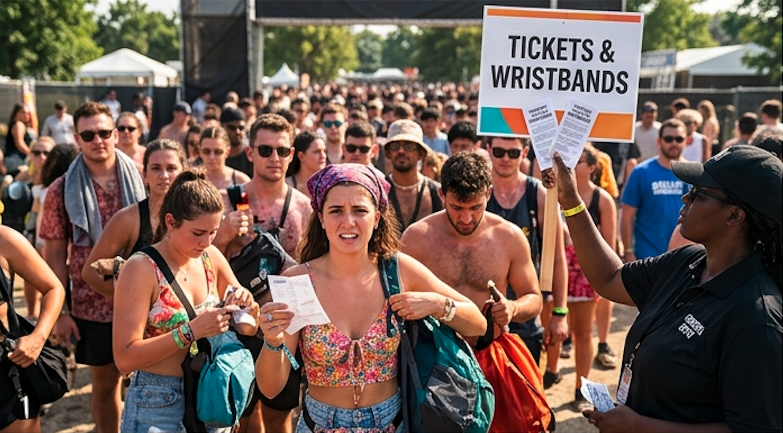
Phase 2: On-Site—Streamlining the Live Event Experience
Once the gates open, the focus shifts from marketing to flawless operational execution and crowd management.
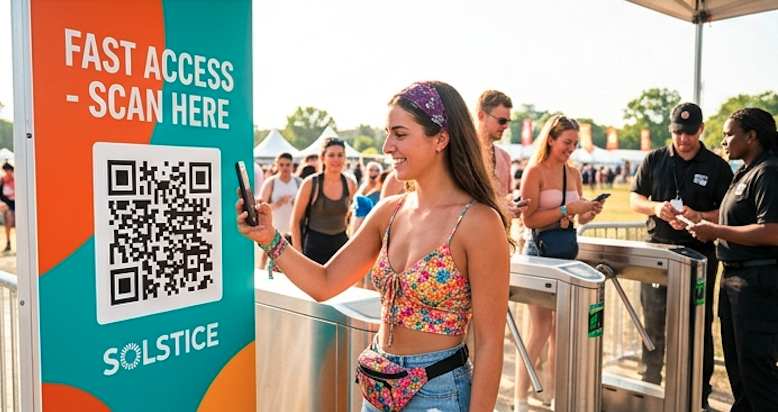
0-60 Seconds: Frictionless Gate Entry
Ditch paper tickets entirely. Attendees present a secure, high-contrast QR code sent to their email or digital wallet. Gate staff use handheld scanners or mobile apps to instantly validate entry, keeping lines moving at top speed and preventing bottlenecking at the front gates.
Upon Arrival: The “No-App” Live Schedule & Map
Direct attendees to massive vertical banners near the entrance featuring a single, prominent QR code. Scanning it opens a lightweight, mobile-optimized map and real-time lineup. If a main-stage artist gets delayed, you update the backend URL instantly without reprinting a single sign. No one has to download a heavy app just to figure out where the nearest restroom is.
During the Event: Line-Free Merch & Concessions
Place unique “Scan to Buy” QR codes on panels alongside the merchandise queues and bar areas. Attendees scan, select their sizes or drinks, pay securely on their phones, and receive a text alert when their order is ready at a dedicated “Fast-Pass Pick Up” window. This eliminates the dreaded 45-minute wait that costs organizers thousands in abandoned sales.
Between Sets: Interactive Sponsor Activations
Gamify the grounds by hiding unique QR codes at sponsor booths or art installations. Scanning them unlocks digital badges, exclusive camera filters, or enters attendees into a raffle for VIP upgrades. This guarantees high foot traffic and measurable ROI for your brand partners, turning a simple sponsor tent into an engaging side-quest.
The Golden Rule for Organizers: Keep It Dynamic
If there is one technical takeaway for festival organizers, it is this: static codes are a massive risk for live events, while dynamic codes are mandatory.
- Fix Mistakes on the Fly: If a link breaks or a food truck vendor changes locations mid-weekend, you can fix the destination URL in the backend in seconds without touching the physical signage.
- The Post-Event Pivot: Once the gates close on Sunday night, that exact same QR code on thousands of attendee wristbands can be redirected to a “Pre-register for Next Year” form or a post-event feedback survey.
- Granular Data Analytics: Track exactly which physical locations, marketing channels, or time slots generated the highest scan engagement. This allows you to prove concrete numbers to future sponsors and refine your strategy for next year.
Ready to Streamline Your Summer?
Summer event production is about maximizing energy and eliminating friction. QR codes aren’t just a tech gimmick; they are a logistical superpower that slashes printing costs, accelerates ticket sales, drives revenue, and keeps crowds happy.
Planning a summer pop-up, block party, or multi-day festival? Start building your dynamic ecosystem today with QR Star!