Remember when QR codes were just pixelated curiosities on posters and packaging? Those days are long gone. Today, they have evolved into indispensable tools that expertly bridge our physical and digital worlds, driving everything from seamless contactless payments to immersive augmented reality experiences.
But how are the smartest brands and professionals actually using them to get real results? We’re moving beyond the basics to dive deep into a curated list of compelling QR code examples, breaking down the specific strategy behind each one. Forget simple links to a website; this is about crafting engaging, measurable, and highly effective customer journeys.
This listicle is designed to be your playbook. We will analyze how businesses use dynamic, branded codes to do more than just direct traffic. They build powerful connections, streamline operations, and deliver tangible outcomes. Get ready to explore innovative tactics, uncover actionable insights, and learn how to replicate these successes for your own goals. Let’s get inspired and see what’s truly possible.
1. Restaurant Menu QR Codes
The shift to digital menus using QR codes is one of the most widespread and recognizable qr code examples from recent years. Spurred by the need for contactless solutions during the pandemic, restaurants of all sizes replaced physical menus with simple QR codes on tables. Customers scan the code with their smartphone, and a digital menu instantly appears in their browser.
This simple scan-to-view process has stuck around long after its initial health and safety motivation. Why? It’s incredibly efficient for both the customer and the restaurant.
Strategic Breakdown
The genius of the menu QR code lies in its simplicity and adaptability. It solves multiple problems at once: reducing printing costs, allowing for instant menu updates (like 86-ing an item or adding a daily special), and speeding up the ordering process. This approach also opens the door to collecting valuable, anonymized data on which menu items are viewed most often.
Key Insight: A menu QR code isn’t just a digital link; it’s a dynamic operational tool. It transforms a static piece of paper into an interactive and updatable customer touchpoint that can streamline service and reduce overhead.
Actionable Takeaways for Your Business
Whether you run a food truck or a fine-dining establishment, you can easily replicate this strategy.
- Make it Easy: Place clear, high-contrast QR codes in obvious locations on every table. Include a simple instruction like “Scan for Menu.”
- Design for Mobile: Ensure your digital menu is mobile-friendly. Large text, clear sections, and high-quality photos are a must.
- Go Beyond the Menu: Link your QR code to a dynamic landing page. This page can include the menu, an “order now” button, links to your social media, or a sign-up for your loyalty program.
Customizing your code’s appearance can also significantly boost engagement. Discover more about creating visually appealing and effective codes in our guide on how to design a QR code.
2. WiFi Password Sharing QR Codes
Another one of the most practical and customer-friendly qr code examples is for instant WiFi access. Instead of forcing guests to find a tiny sign, ask a staff member, and manually type a long, complex password, businesses can provide a QR code that connects them instantly. This simple scan-and-connect process removes a significant friction point for customers in cafes, hotels, and waiting rooms.
This use case gained widespread popularity as smartphone operating systems, like iOS and Android, integrated native QR scanning capabilities. It eliminates typos and streamlines the process of getting online, dramatically improving the guest experience.
Strategic Breakdown
The WiFi QR code is a perfect example of using technology to enhance hospitality. It solves a common customer annoyance with a zero-effort solution. For businesses like coffee shops, co-working spaces, or Airbnb rentals, offering seamless WiFi is no longer a perk but an expectation. Using a QR code shows attention to detail and a commitment to a smooth customer journey from the moment they walk in. It also reduces the time staff spend reciting passwords.
Key Insight: A WiFi QR code is more than a convenience; it’s a subtle but powerful signal of good customer service. It removes a barrier, saves time for both guests and staff, and contributes to a modern, tech-savvy brand image.
Actionable Takeaways for Your Business
Any location offering guest WiFi can benefit from this simple but effective strategy.
- Prioritize Security: Always link the QR code to a secure guest network, separate from your primary business network, to protect sensitive operational data.
- Place Strategically: Display the QR code in highly visible locations where guests will look for it: on tables, at the counter, on the back of a door, or in a welcome binder.
- Provide Clear Context: Place the network name (SSID) next to the QR code. This helps users confirm they are connecting to the correct network and provides a manual option if needed.
3. Event Ticketing and Check-in QR Codes
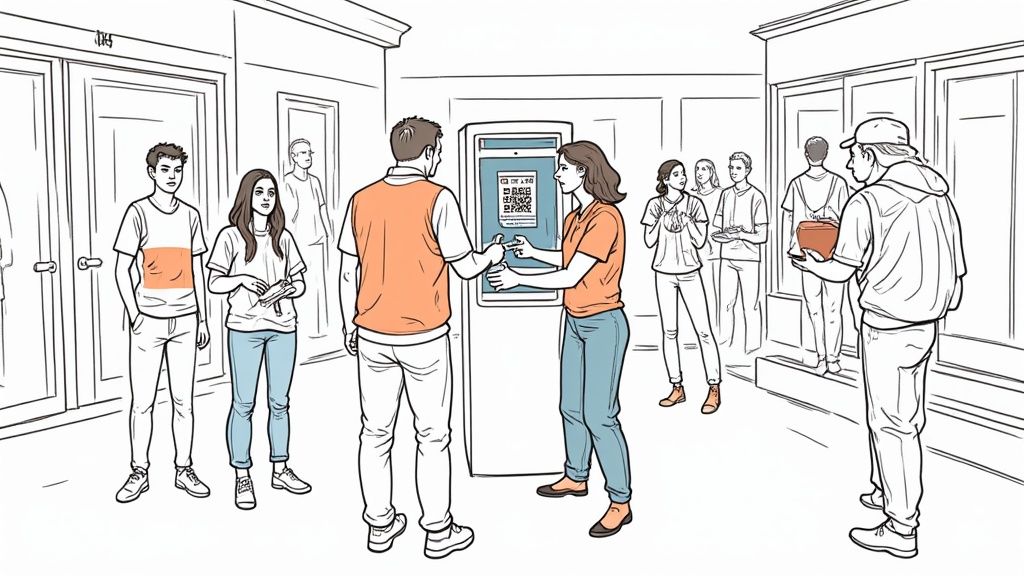
The move from paper tickets to digital passes is one of the most practical and secure qr code examples in modern event management. Instead of mailing or printing tickets, organizers like Eventbrite and Ticketmaster issue unique QR codes to attendees’ phones. At the venue, a quick scan validates the ticket, granting entry and streamlining the entire check-in process.
This system has become the standard for everything from concerts and sports games to airline boarding passes and trade shows. The reason for its widespread adoption is clear: it offers enhanced security, massive cost savings, and unparalleled convenience for both organizers and guests.
Strategic Breakdown
The strength of a QR code ticket is its ability to serve as a secure, unique digital key. Each code contains encrypted data specific to one attendee, making it incredibly difficult to counterfeit compared to a paper ticket. For event managers, this technology provides real-time data on arrivals, helps manage venue capacity accurately, and drastically reduces queues at the entrance.
Key Insight: A QR code ticket transforms event entry from a simple transaction into a data-driven security checkpoint. It creates a seamless flow for guests while giving organizers powerful tools to manage logistics and prevent fraud.
Actionable Takeaways for Your Business
Whether you’re organizing a small workshop or a large conference, you can leverage QR codes to professionalize your event management.
- Ensure Reliability: Use high-resolution QR codes that are easy to scan, even on a cracked phone screen. Test them under various lighting conditions.
- Provide Clear Instructions: Send attendees simple, clear guidance on how to access and present their QR code ticket, especially for less tech-savvy guests.
- Plan for Contingencies: Have a backup system in place. This could include offline validation capabilities for areas with poor internet or a manual check-in list for troubleshooting.
Using QR codes for entry is also an excellent method for business events. Explore how you can use similar technology with our guide on trade show lead capture.
4. Product Authentication and Anti-Counterfeiting QR Codes
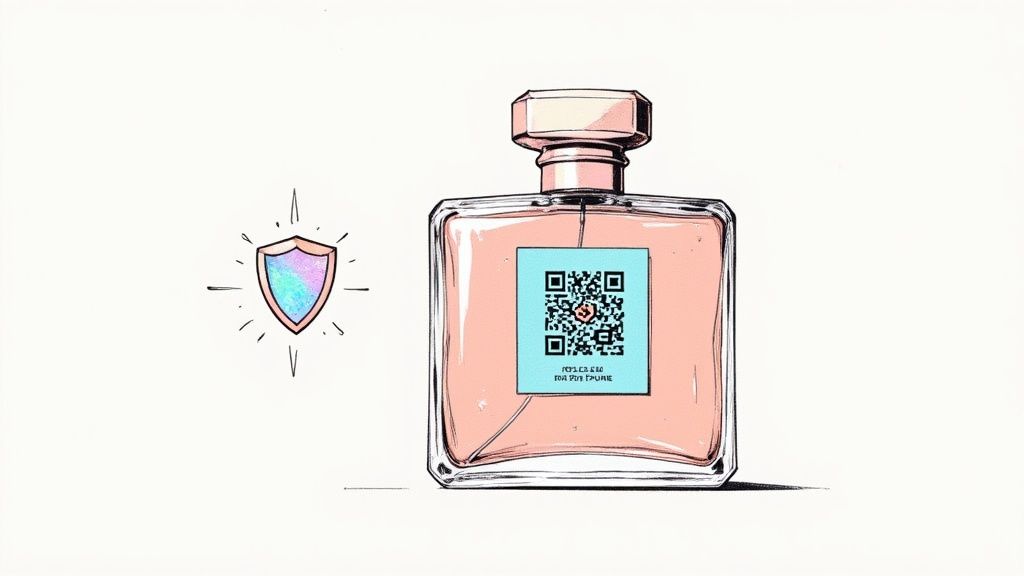
In an era of sophisticated counterfeits, QR codes have emerged as a powerful weapon for brands seeking to protect their products and customers. These aren’t your average codes; they are security-focused qr code examples that link to secure databases or even blockchain records to verify a product’s authenticity. A quick scan can instantly tell a customer if their luxury handbag, limited-edition sneaker, or vital medication is genuine.
This application moves beyond marketing into the critical realm of brand protection and supply chain integrity. By placing a unique, often encrypted, QR code on each item, companies like LVMH and Nike give consumers direct access to verification tools, building trust and safeguarding brand value.
Strategic Breakdown
The power of an authentication QR code is its ability to create a unique digital identity for a physical product. This one-to-one link is incredibly difficult for counterfeiters to replicate at scale. When tied to a secure backend like a blockchain, the code provides an immutable record of the product’s journey from creation to consumer, offering transparency that was previously impossible.
Key Insight: An authentication QR code transforms a product from a static object into a verifiable digital asset. It shifts the power of verification directly into the hands of the consumer, creating an army of brand advocates who can instantly spot fakes.
Actionable Takeaways for Your Business
If you sell high-value or easily counterfeited goods, implementing this strategy can be a game-changer for building customer confidence.
- Partner for Security: Don’t try to build a complex verification system from scratch. Partner with established platforms that specialize in anti-counterfeiting and secure QR code generation.
- Educate Your Customers: Create clear instructions on your packaging and website explaining how to scan the code and what to look for to confirm authenticity. Make the process simple and rewarding.
- Layer Your Security: Use QR codes in conjunction with other security features like holograms or tamper-evident seals. A multi-layered approach provides the strongest defense against counterfeiters.
5. Contact Information QR Codes
Exchanging business cards is a timeless networking ritual, but manually entering that information into a phone is tedious. This is where vCard QR codes provide a seamless modern upgrade, making them powerful qr code examples for professionals. When someone scans a vCard QR code, it automatically populates a new contact field on their smartphone with all your pre-loaded details.
This technology transforms a static business card, email signature, or presentation slide into an interactive tool. It eliminates the friction of manual data entry, ensuring your contact details are saved accurately and instantly. Popularized by platforms like LinkedIn and integrated into many digital business card apps, this use case is all about speed and convenience.
Strategic Breakdown
The power of a vCard QR code is in its ability to bridge the physical and digital worlds in a single, simple action. It removes the risk of a potential connection losing your card or misspelling your name or email. For real estate agents, sales professionals, and event attendees, this means turning a fleeting interaction into a permanent and actionable contact in someone’s address book.
Key Insight: A vCard QR code is more than just a digital business card; it’s a direct pipeline into a person’s digital life. It guarantees your information is captured correctly, increasing the likelihood of a follow-up and solidifying a new connection.
Actionable Takeaways for Your Business
Whether you’re networking at a conference or pitching a new client, you can leverage this simple yet effective tool.
- Be Strategic with Information: Don’t overload the vCard. Include the essentials: your name, company, job title, phone number, and primary email. You can also add a link to your LinkedIn profile.
- Place it Prominently: Add your vCard QR code to your email signature, the last slide of a presentation, your conference name badge, or even as the lock screen on your phone for quick scanning.
- Provide Clear Context: Always include a short call to action like “Scan to Save My Contact” next to the code. This removes any guesswork and encourages people to scan it.
6. Social Media Profile and Content Sharing QR Codes
Connecting offline audiences with online social media profiles is a classic marketing challenge, and QR codes provide a direct, frictionless solution. These qr code examples bridge the physical and digital worlds by instantly directing users to a brand’s Instagram, TikTok, YouTube, or other social channels. Instead of asking customers to manually search for a profile, a quick scan does the work for them.
This tactic has become essential for growing an online community from real-world touchpoints like events, product packaging, or in-store signage. Platforms like Snapchat (with its Snapcodes) and Instagram have even integrated native QR code features, underscoring their importance in modern social strategy.
Strategic Breakdown
The power of a social media QR code is its ability to capture audience interest in the moment. A customer enjoying your product or attending your event is already engaged; a QR code makes it incredibly simple to convert that positive experience into a long-term connection by gaining a new follower. It removes the friction of searching and typing, which is a major barrier to conversion.
Key Insight: A social media QR code is an impulse-driven conversion tool. It leverages immediate engagement to build a lasting digital relationship, turning a fleeting real-world interaction into a valuable addition to your online community.
Actionable Takeaways for Your Business
Whether you’re a content creator, a small business, or a large brand, you can use QR codes to boost your social media presence.
- Offer an Incentive: Give users a reason to scan. Place the QR code next to a compelling call-to-action like, “Scan to follow us for exclusive deals!” or “Scan to see behind-the-scenes content.”
- Place it Strategically: Put your QR code where your audience has dwell time. Think business cards, product packaging, event banners, receipts, or table tents.
- Link to High-Value Content: Don’t just link to your profile page. Consider linking to a specific viral video, a contest entry post, or a welcome video to make a stronger first impression.
By integrating these codes into your marketing materials, you can create a seamless pipeline from offline engagement to online growth. To dive deeper, explore our complete guide on using QR codes in social media.
7. Payment and Digital Wallet QR Codes
Financial QR codes have transformed the way we handle money, enabling instant digital payments directly from a smartphone. These qr code examples bridge the gap between physical retail and digital wallets, allowing for secure, seamless transactions with a simple scan. From street vendors to major retailers, this technology has made payments faster and more accessible.
The concept is straightforward: a customer scans a merchant’s unique QR code using a payment app like PayPal, Venmo, or Cash App. They enter the amount, confirm the payment, and the funds are transferred instantly. This method bypasses the need for physical cards or cash, streamlining the entire checkout process.
Strategic Breakdown
The power of payment QR codes is their ability to democratize digital finance. They lower the barrier to entry for small businesses, eliminating the need for expensive point-of-sale hardware. For consumers, they offer a quick, secure, and unified way to pay for anything, anywhere. Platforms like Alipay and India’s UPI have built entire economic ecosystems around this technology.
Key Insight: A payment QR code is more than just a transaction method; it’s an economic enabler. It integrates payments into the mobile experience, creating a frictionless and highly scalable financial infrastructure that benefits both merchants and customers.
Actionable Takeaways for Your Business
Whether you’re a small business or an established enterprise, integrating QR code payments can enhance your customer experience and operational efficiency.
- Offer Multiple Options: Display QR codes for popular digital wallets like PayPal, Venmo, and Cash App to cater to customer preferences.
- Ensure Security: Always use reputable, secure, and encrypted payment platforms. Educate your staff and customers to verify payment details before confirming transactions.
- Integrate with POS: For a smoother workflow, connect your QR code payment system with your existing point-of-sale software to automate record-keeping and inventory management.
8. Healthcare and Medical Information QR Codes
In the healthcare sector, QR codes have become a critical tool for securely and efficiently managing patient information. These are not your typical marketing qr code examples; they are designed for high-stakes environments where accuracy and security are paramount. From patient wristbands that link to medical records to prescription bottles that offer detailed medication information with a simple scan, QR codes are streamlining processes and reducing human error.
The global pandemic highlighted their power, with health passes and vaccination records like the EU’s Digital COVID Certificate becoming commonplace. This rapid adoption demonstrated how QR codes can bridge the gap between physical items and secure digital information, improving patient care and operational workflow in hospitals, clinics, and pharmacies.
Strategic Breakdown
The core strategy behind healthcare QR codes is leveraging technology to enhance safety, accuracy, and accessibility. A QR code on a patient’s wristband can instantly give a nurse access to allergies, medications, and critical health data, preventing dangerous mix-ups. On medical equipment, a QR code can track calibration schedules and maintenance history, ensuring devices are safe and effective for use.
Key Insight: Healthcare QR codes transform everyday objects into secure gateways for vital information. Their value lies in creating a frictionless, accurate, and immediate link between the physical patient or device and their corresponding digital record, all while adhering to strict privacy regulations like HIPAA.
Actionable Takeaways for Your Business
While you might not be in healthcare, the principles of security and instant information access are widely applicable, especially in regulated industries or for managing sensitive data.
- Prioritize Security: When dealing with sensitive information, use dynamic QR codes linked to secure, encrypted platforms. Always ensure compliance with relevant privacy laws.
- Ensure Accessibility: Provide clear instructions and consider users who may not be tech-savvy. For critical information, always offer a non-digital alternative.
- Integrate with Workflows: Implement QR codes to solve specific problems in your operational flow, such as asset tracking, user authentication, or providing quick access to instruction manuals.
Putting Your QR Code Strategy into Action
As we’ve explored through these diverse qr code examples, from streamlining restaurant orders to securing event tickets and even sharing complex medical information, one truth becomes crystal clear. QR codes are no longer just a quirky tech novelty; they are a powerful, versatile, and essential tool for modern engagement. The simple black and white square has evolved into a dynamic bridge connecting our physical and digital worlds in increasingly sophisticated ways.
The most successful campaigns we analyzed didn’t just place a QR code on a product or poster. They integrated it thoughtfully into the user journey, offering genuine value at the precise moment it was needed. This is the core principle that separates a forgettable scan from a memorable, brand-building interaction.
Your Blueprint for QR Code Success
Reflecting on the examples of WiFi access, vCard sharing, and product authentication, the key takeaways are not about the technology itself, but the strategy behind it. To create campaigns that resonate and deliver results, focus on these core pillars:
- Context is King: The power of a QR code lies in its context. A code for a menu is most effective on a restaurant table, just as a code for event check-in is most valuable on a digital ticket. Always ask: where will my audience be, and what do they need in that exact moment?
- Value Proposition is Crucial: Why should someone scan your code? The answer must be immediate and compelling. Whether you offer instant access, exclusive content, a simplified payment process, or critical information, the benefit to the user must be obvious.
- Branding Builds Trust: A generic QR code can feel anonymous or even unsafe. Customizing your code with your brand’s colors, logo, and a clear call to action not only improves aesthetics but also builds the trust necessary to encourage a scan.
- Data Drives Optimization: The most strategic qr code examples are those that learn and adapt. Using dynamic QR codes with built-in analytics allows you to see what’s working and what isn’t, turning every scan into a valuable insight to refine your future campaigns.
Mastering these approaches transforms the humble QR code from a simple link-sharing tool into a cornerstone of your operational and marketing strategy. It’s about creating seamless experiences, reducing friction for your customers, and gathering the data needed to make smarter business decisions. The potential is immense, and the tools to achieve it are more accessible than ever. Now, it’s your turn to build the next great example.
Ready to move from inspiration to implementation? The powerful customization, dynamic editing, and in-depth analytics features we explored in these qr code examples are all at your fingertips with QR Star. Start creating codes that not only connect but also convert by visiting QR Star and begin your free trial today.